Semaglutide, tirzepatide, and retatrutide are often grouped together as "GLP-1 drugs" — but that framing obscures the most important differences between them. Each generation activates a different set of hormone receptors, and those receptor combinations produce meaningfully different metabolic outcomes. The progression isn't incremental marketing. It follows directly from the biology.
The Three Receptors That Matter
Three hormone receptors determine how these compounds work: GLP-1, GIP, and glucagon. Each does something distinct, and their interactions aren't simply additive.
- GLP-1 (glucagon-like peptide-1) acts on the brain's satiety circuits to reduce appetite, slows gastric emptying, and triggers glucose-dependent insulin release — without the hypoglycaemia risk associated with older diabetes medications. [1]
- GIP (glucose-dependent insulinotropic polypeptide) amplifies insulin secretion and sensitises subcutaneous adipose tissue to insulin by promoting GLUT4 transporter translocation to the plasma membrane — priming fat cells for insulin's effects rather than mimicking insulin directly. [2]
- Glucagon normally raises blood glucose, but when activated alongside GLP-1, the hyperglycaemic effect is largely suppressed while its thermogenic and lipolytic actions remain intact. GCGR activation increases energy expenditure across species including humans, and enhances weight loss beyond what either GLP-1R or dual GIP/GLP-1R agonism achieves in isolation. [3]
Combining all three doesn't simply layer their individual effects — it produces a synergistic metabolic response that neither single nor dual agonism replicates. [4]
How the Compounds Compare
Semaglutide: Where It Started
Semaglutide (Ozempic/Wegovy) targets GLP-1 receptors only. Its impact at launch was significant: the SELECT cardiovascular outcomes trial (17,604 participants with pre-existing cardiovascular disease and obesity but no diabetes) showed a 20% reduction in major adverse cardiovascular events. [5] [6] Its mechanism — reduced appetite, slower digestion, improved glycaemic control — is effective but relatively narrow. Unlike later-generation compounds, it does not meaningfully increase resting energy expenditure through thermogenesis. [7]
Tirzepatide: Adding GIP
Tirzepatide (Mounjaro/Zepbound) was the first approved dual GLP-1/GIP agonist. The GIP component improves adipose insulin sensitivity and reinforces the appetite-suppressing effects of GLP-1 co-activation. Head-to-head data is clear: in SURMOUNT-5, tirzepatide produced mean weight loss of 20.2% vs. 13.7% with semaglutide over 72 weeks, superior on all key secondary endpoints. [8] [9] A 2025 meta-analysis across 36,754 tirzepatide participants found a weighted mean difference of 4.23% greater weight loss versus semaglutide across all study durations. [10]
Retatrutide: Adding Glucagon
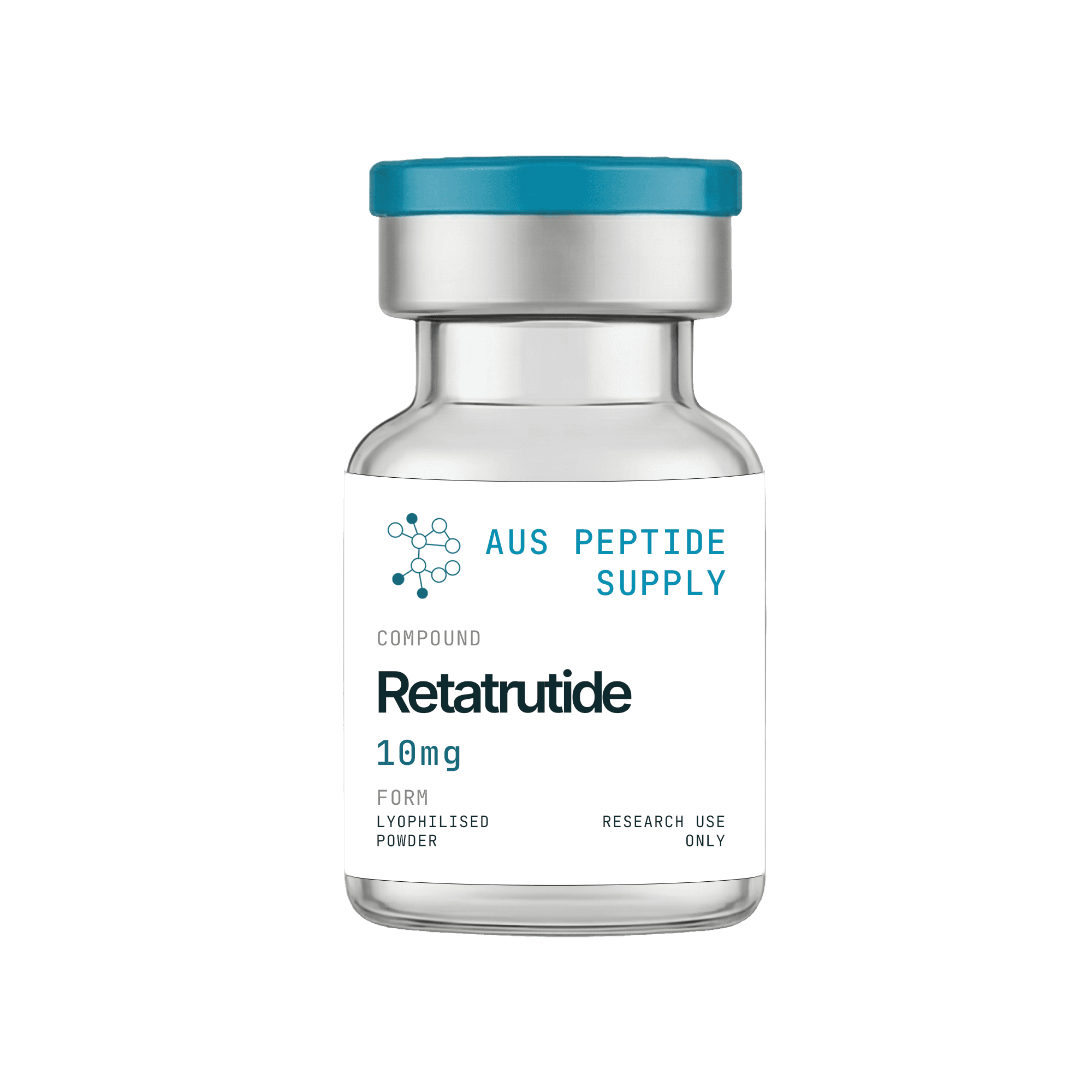
Retatrutide (LY3437943) adds the glucagon receptor to the GLP-1/GIP combination. This is the defining upgrade. GCGR co-activation increases whole-body energy expenditure via brown adipose tissue thermogenesis and augments lipolysis — driving weight loss beyond what dual agonism can achieve, not just through eating less, but through burning more. [11] [3]
Phase 2 results at 12 mg showed mean body weight reduction exceeding 24% at 48 weeks, with 100% of participants at 8 mg and 12 mg reaching the 5% threshold — and no plateau observed at trial end. [12] [13] Phase 3 (TRIUMPH-4, December 2025 topline) showed average weight loss of 28.7% — 71.2 lbs / 32.3 kg — at 68 weeks, the highest ever recorded in a Phase 3 obesity trial, with secondary benefits including reduced knee osteoarthritis pain. [14] [15]
One new finding from TRIUMPH-4 worth tracking: dysaesthesia (abnormal touch perception) appeared as a safety signal not seen prominently in Phase 2. Further Phase 3 readouts in 2026 will clarify the frequency and severity of this effect. [17]
The Bottom Line
The receptor profile tells you exactly what to expect. Semaglutide dials down appetite through GLP-1. Tirzepatide adds GIP to improve how fat tissue handles insulin. Retatrutide adds glucagon to increase how much energy the body burns. Pre-clinical and clinical evidence confirms that GCGR activation, in combination with GLP-1R agonism, raises whole-body metabolic rate through thermogenesis and accelerates fat loss beyond what either earlier generation achieves. [16] [11] [3]
References
- Nature – GLP-1 Receptor: Mechanisms and Advances in Therapy (2024)
- Mohammad et al. – Gastric Inhibitory Peptide Controls Adipose Insulin Sensitivity, PMC (2011)
- PMC – Is Glucagon Receptor Activation the Thermogenic Solution for Obesity? (2022)
- PMC – Glucagon, GLP-1 and Thermogenesis (2019)
- ACC.org – SELECT Trial: Semaglutide Effects on Cardiovascular Outcomes (2023)
- Lincoff et al. – Semaglutide and Cardiovascular Outcomes in Obesity without Diabetes, NEJM (2023)
- Ryan et al. – Long-Term Weight Loss Effects of Semaglutide in Obesity, Nature Medicine (2024)
- Rheumatology Advisor – Tirzepatide Bests Semaglutide in SURMOUNT-5 Trial (2024)
- ACC.org – SURMOUNT-5: Greater Loss of Weight with Tirzepatide (2025)
- PMC – Comparative Efficacy of Tirzepatide vs. Semaglutide, Meta-analysis (2025)
- PMC – Glucagon Receptor Agonism and Brown Adipose Tissue Thermogenesis
- Jastreboff et al. – Triple-Hormone-Receptor Agonist Retatrutide for Obesity, NEJM (2023)
- Falk Foundation – Triple-Hormone-Receptor Agonist Retatrutide – Phase 2 Trial (2023)
- Eli Lilly / PR Newswire – TRIUMPH-4 Phase 3 Topline Results (December 2025)
- Clinical Trials Arena – Lilly's Retatrutide: 28.7% Weight Loss in Phase 3 (2025)
- Diabetes Journals – Energetic Contributions of GLP-1 and GCGR Activity in Triagonism (2023)
- BioSpace – Retatrutide TRIUMPH-4 Safety Signal: Dysaesthesia (2025)
⚠ All information is for educational and research purposes only. Retatrutide is not currently approved by the TGA or FDA for human use. For in-vitro research and laboratory use only. Not for human consumption.